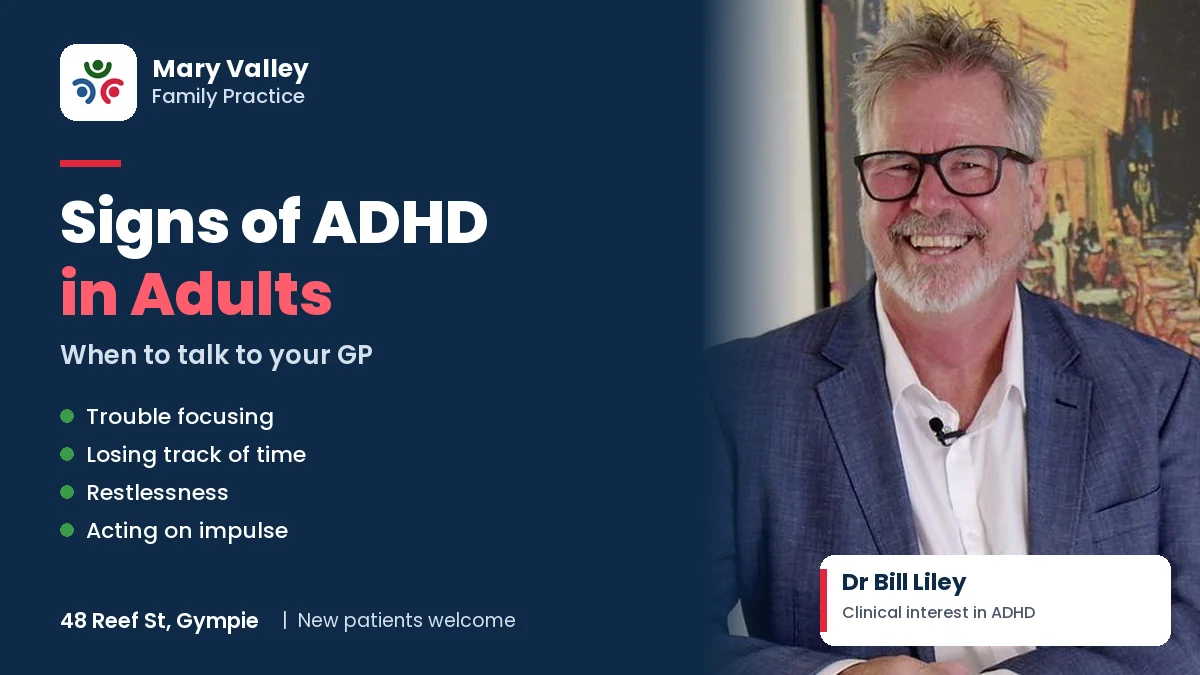
Many adults start to wonder about ADHD after years of feeling scattered, running late or getting overwhelmed by everyday jobs. For others, the question comes up when a child, partner or friend is diagnosed. The signs of ADHD in adults are often quieter than the hyperactive picture most people expect. They tend to show up as trouble with focus, time, planning and emotions, and they have usually been there since childhood. If this sounds familiar, your GP is a good place to start. You can read how our doctors help with ADHD assessment in Gympie, or keep reading for the common signs and when to book.
| Quick answer Common signs of ADHD in adults include trouble focusing, losing things, missing deadlines, acting on impulse, restlessness and strong emotions that flare and pass quickly. What sets ADHD apart is that these signs started in childhood, show up in more than one part of life, and get in the way of work, study or relationships. A GP can help you work out the next step. |
What are the signs of ADHD in adults?
ADHD (attention deficit hyperactivity disorder) is a neurodevelopmental condition, which means it affects how the brain develops and works. It begins in childhood. Healthdirect reports that around 1 in 20 people in Australia has ADHD, and many children with ADHD still have symptoms as adults. Some people are not diagnosed until adulthood.
Adult ADHD symptoms usually fall into three groups. Most people have a mix, and some groups are stronger than others.
Trouble with attention
- Losing focus in conversations, meetings or while reading
- Making careless mistakes at work, even on tasks you know well
- Starting lots of tasks and finishing few of them
- Losing keys, phones, wallets or paperwork
- Forgetting appointments, bills or things you said you would do
- Putting off tasks that need long mental effort, such as tax, forms or reports
Restlessness
In adults, hyperactivity is often an inner feeling rather than running around. You might notice:
- Feeling restless or always needing to be busy
- Fidgeting, or finding long meetings, movies or car trips hard to sit through
- Talking a lot, or talking over others without meaning to
- Finding it hard to switch off and relax
Impulsivity and emotions
- Interrupting people or finishing their sentences
- Spending on impulse, then regretting it
- Making quick decisions about jobs, money or relationships
- A short fuse, with frustration that flares up and settles quickly
- Feeling hurt by criticism more than others seem to
Many adults also talk about problems with time. They run late, misjudge how long tasks will take, and leave things to the last minute, even when they care a lot about the result.
How ADHD can affect daily life
Everyone loses their keys or misses a deadline now and then. With ADHD, the signs are ongoing and they cause real problems. Common examples include:
- Work and study: missed deadlines, trouble with admin, changing jobs often, or working long hours to keep up
- Home: late bills, clutter, half-finished jobs around the house
- Relationships: forgotten plans, a partner who feels unheard, arguments about chores
- Money: impulse spending, late fees, trouble sticking to a budget
- Health: poor sleep, skipped meals, trouble keeping up with appointments or medicines
Many adults build their own ways to cope, such as phone alarms, lists or staying back late. These can hide ADHD for years. It often becomes harder to manage when life gets busier, such as a new job, a new baby or going back to study.
ADHD in women
ADHD is more often diagnosed in boys, but healthdirect notes that it is underdiagnosed in girls and in adults. Girls with ADHD are more likely to have trouble with attention than with hyperactivity. A quiet, daydreaming student does not draw the same attention as a disruptive one, so the signs are easy to miss at school.
Signs of ADHD in women can include:
- Being called a daydreamer, chatty or disorganised at school
- Working much harder than others to keep up, then feeling worn out
- Hiding struggles and copying how others cope, often called masking
- Being treated for anxiety or depression first, while the ADHD goes unnoticed
- Feeling that symptoms are worse at certain times of the menstrual cycle, after having a baby, or around perimenopause
Hormone changes may play a part in that last point, and research in this area is still growing. Many women first ask about ADHD when their own child is being assessed, because ADHD often runs in families. If you have concerns about your child, our children’s health page explains how our GPs support kids and families.
ADHD vs anxiety: how to tell the difference
ADHD and anxiety share some signs, such as trouble concentrating, restlessness, poor sleep and feeling overwhelmed. They also often happen together, which can make it hard to tell them apart on your own. These questions can help:
| Question | More like ADHD | More like anxiety |
|---|---|---|
| When did it start? | Since childhood, even if no one noticed | Often later, or with a stressful time in life |
| Why is focus hard? | Your mind wanders even when you feel calm | Worry keeps pulling your attention away |
| When is it worse? | Long or boring tasks, most of the time | Stressful times, and it eases when stress passes |
| What does restlessness feel like? | A need to move or keep busy | Feeling tense or on edge |
Other health problems can also look like ADHD. These include poor sleep or sleep apnoea, depression, thyroid problems, low iron, side effects of some medicines, and heavy alcohol or drug use. This is one reason a GP check comes first.
What does the ADHD assessment process involve?
There is no blood test or scan that can diagnose ADHD. A diagnosis is based on a detailed history. Doctors look for several symptoms that started before age 12, have lasted at least 6 months, show up in two or more settings (such as work and home), and affect how you function. The process usually looks like this:
- A first GP visit to talk about your concerns and check for other causes. This may include blood tests.
- Questionnaires about your symptoms now and in childhood.
- Information from others, such as a partner or parent, and old school reports if you have them.
- A diagnosis by a doctor with training in ADHD. Some GPs do this themselves, and others refer you to a psychiatrist.
- A plan that may include medicine, psychology, coaching, support at work or study, and regular reviews.
Queensland rules changed recently. Since 1 December 2025, specialist GPs in Queensland can prescribe ADHD medicine for adults and children. For how this works at our clinic, including what to bring and how long it takes, see our ADHD assessment page.
When should you talk to your GP?
Having a few of these signs does not mean you have ADHD. It is worth booking a GP appointment if:
- The signs have been there since you were a child and still cause problems
- Your work, study, money or relationships are suffering
- You have tried lists, apps and routines but still struggle
- You were diagnosed as a child and want to review your care as an adult
- A close family member has ADHD and you see the same signs in yourself
It helps to write down a few real examples before your visit, such as missed deadlines or forgotten bills, and how long they have been happening.
If you feel unsafe or are thinking about harming yourself, call 000 or Lifeline on 13 11 14 straight away.
Common questions about ADHD in adults
Can you develop ADHD as an adult?
ADHD starts in childhood. Adults are diagnosed later because the signs were missed or they found ways to cope. If your focus problems only started recently, your GP will look for other causes, such as stress, sleep or mood.
Is there an online test for adult ADHD?
Self-check questionnaires, such as the World Health Organization Adult ADHD Self-Report Scale (ASRS), can show whether it is worth talking to a doctor. They cannot diagnose ADHD on their own.
Can I have ADHD and anxiety at the same time?
Yes. This is common. Your doctor will look at both, because treating one can make the other easier to manage.
Why is ADHD often missed in women?
Women more often have trouble with attention rather than hyperactivity, are good at hiding their struggles, and are often diagnosed with anxiety or depression first.
Does ADHD get worse with age?
Hyperactivity often eases as people get older, while trouble with attention tends to stay. Busier work and family life can make the signs feel worse, even when ADHD itself has not changed.
Book a GP appointment
If you can see yourself in this guide, you do not have to work it out alone. Our GPs take time to listen and help you decide on the next steps. Dr William (Bill) Liley has a clinical interest in ADHD assessment and management across the lifespan.
Related pages
Book a GP Appointment in Gympie
Sources
Book an appointment with our friendly team.