| In an emergency, call 000. For health advice any time, call healthdirect on 1800 022 222. This article is general information, not medical advice. |
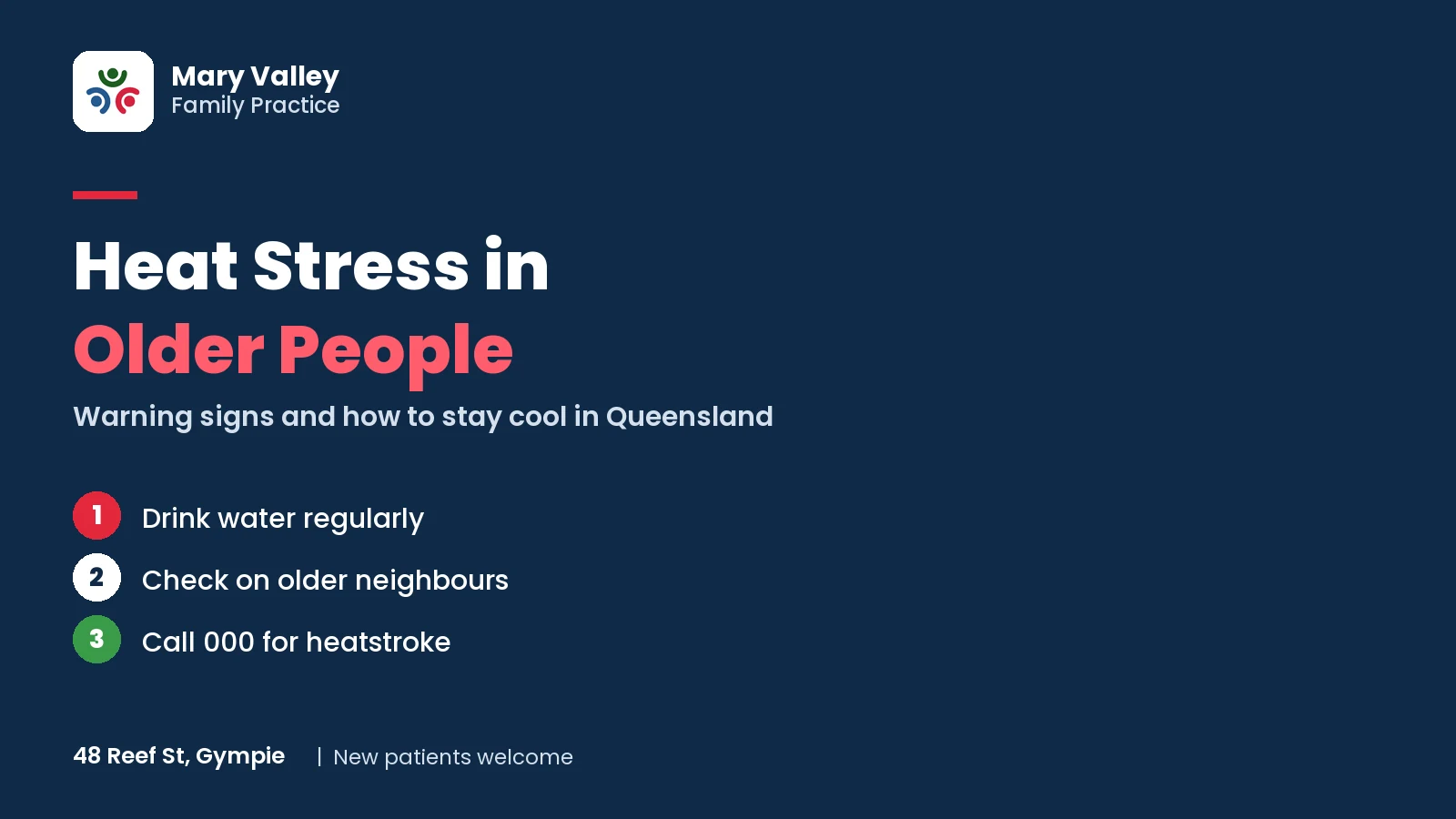
| Quick answer Older people are more at risk of heat stress and heatstroke because the body cools itself less efficiently with age. Watch for dizziness, headache, nausea, unusual tiredness, confusion or unsteady walking. Move the person somewhere cool, sip water and call 000 if they are confused, faint or not improving within an hour. |
Older people are among the groups most affected by hot weather in Queensland, especially during heatwaves. Some people in this age group do not feel the heat as a personal risk, so families and neighbours often notice the warning signs first. A health assessment in Gympie is a good time to talk with your GP about your own risks before the hot months start. Heat stress symptoms in elderly people are easy to miss, and heat can make existing heart, lung and kidney conditions worse, so it is worth planning ahead.
Why older people are at higher risk
As people age, the body is less efficient at sweating and adjusting its temperature. Heat can also put extra strain on the heart, which can be a problem for people with existing conditions. Some common medicines can change how the body handles heat or fluid, so it is worth asking your GP or pharmacist whether any of your medicines affect you in hot weather. Do not stop or change a medicine without talking to your doctor first.
Heat stress symptoms in elderly people: what to watch for
Heat stress can start gently and get worse quickly. The early signs are often easy to miss in an older person, so check on them if the weather is hot. Watch for:
- Headache, dizziness or feeling faint
- Heavy sweating, or in some cases, very dry skin
- Nausea or vomiting
- Unusual tiredness, weakness or sleepiness
- Dry mouth, dry eyes or dark urine
- Muscle cramps
If these symptoms last longer than an hour, or get worse, see a doctor. Healthdirect has general information about looking after yourself in hot weather, and the Better Health Channel explains heat stress and older people in more detail.
Heatstroke: when it becomes an emergency
Heatstroke is a medical emergency. It can happen when the body overheats and cannot cool itself. Signs can include:
- Confusion, agitation or slurred speech
- Unsteady walking, or loss of balance
- A fast or weak pulse, and fast, shallow breathing
- Fits or seizures
- Loss of consciousness
Call 000 straight away for any of these signs. While you wait, move the person to a cool place, remove extra clothing, wet their skin with cool water and fan them. Only give fluids if the person is awake and able to swallow safely. Do not leave them alone.
Staying cool and hydrated in a heatwave
Simple steps make a big difference in the middle of the day, when temperatures are highest. Plan ahead and keep the house as cool as you can.
- Close curtains and blinds during the day, and open windows at night when it is cooler.
- Stay indoors in the coolest part of the house, and avoid heavy activity in the afternoon.
- Wear light, loose clothing and a wide-brimmed hat when going outside.
- Take a cool shower or bath if you feel hot.
- Drink water regularly, even if you do not feel thirsty. Ask your GP how much to drink if you are normally asked to limit fluids.
- Keep a list of the people who can check on you, and let them know when a heatwave is coming.
Heat and existing health conditions
Many older people live with a condition such as high blood pressure, heart disease, diabetes, asthma, COPD or kidney disease. Hot weather can make these conditions harder to manage, and it can change how well some treatments work. Keep taking your usual treatment as prescribed, keep your home cool, and keep a note of how you feel on hot days. If your readings or symptoms change during a heatwave, talk to your GP early rather than waiting for your next visit.
Diabetes can also make it harder to notice thirst and changes in body temperature. People with diabetes should check their blood sugar more often on very hot days and ask their GP for advice about fluids and meals in the heat.
Making a heatwave plan
A simple plan means you know what to do before the heat arrives. Write it down and keep it near the phone.
- Keep a list of your GP’s phone number, healthdirect on 1800 022 222 and the number for your nearest emergency department.
- Know where the coolest room in your home is, and check that a fan or air conditioner works before the heatwave starts.
- Stock up on water and food that does not need cooking, so you do not need to go out in the hottest part of the day.
- Agree on a daily check-in with a family member, friend or neighbour who can call you during the heat.
- Keep your medicines in a cool, dry place as their labels direct, and ask your pharmacist how the heat may affect them.
- Know the signs of heatstroke and when to call 000, and make sure the people who visit you know them too.
Checking on older family and neighbours
In a heatwave, look out for older relatives, neighbours and friends. Call them, visit if you can, and ask how they are coping. Check that they have water, that their home is staying cool and that they know what to do if they feel unwell. Older people who live alone may need extra help, so a short phone call each day can make a real difference.
When to see a GP about heat illness
Book a GP appointment if any of these apply:
- Symptoms of heat stress keep coming back during hot weather
- You have a heart, lung or kidney condition and feel unwell in the heat
- You take medicines and are not sure how they affect you in hot weather
- You have been unwell after a hot day and do not seem to be getting better
- You are unsure whether your symptoms are serious. Healthdirect nurses can help on 1800 022 222 at any hour.
Related guides: heart health check: who needs one and what happens, chronic disease management in Gympie.
Frequently asked questions
What is the difference between heat stress and heatstroke?
Heat stress causes discomfort, such as headache, dizziness and tiredness, and it usually improves once the person cools down and drinks water. Heatstroke is more serious, because the body temperature becomes dangerously high and confusion or fits can happen. Heatstroke needs a call to 000.
How much water should an older person drink in hot weather?
There is no single amount that suits everyone. Many older people need to drink regularly on hot days, but people with heart, kidney or fluid restrictions should ask their GP first. Sip water through the day rather than drinking large amounts at once.
Can a fan help during a heatwave?
A fan can help when the air is cooler than the body, but in very hot weather a fan alone may not be enough. Cool showers, a cool room and drinking water are also important. If the person is not feeling better, see a doctor.
Should I call a GP or 000 if I am worried?
Call 000 for confusion, fainting, fits, trouble breathing or any sign of heatstroke. For other concerns, call healthdirect on 1800 022 222 to speak with a registered nurse, or book a GP appointment.
This article is general information, not medical advice. Sources include Better Health Channel: heat stress and older people, Queensland Health heat health warning and healthdirect.
Book an appointment with our friendly team.