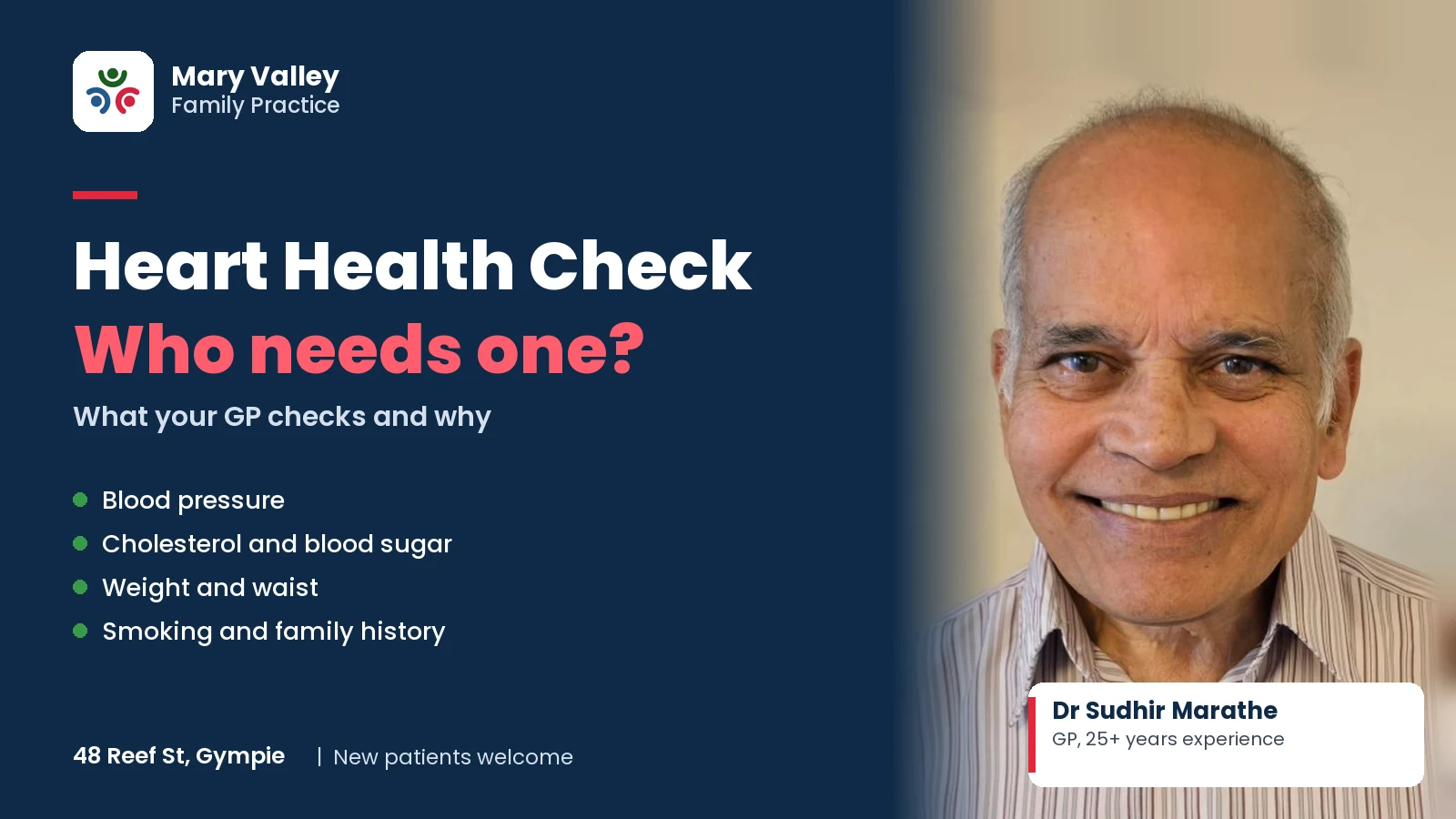
| Quick answer A heart health check estimates your risk of heart attack and stroke over the next five years. Your GP checks your blood pressure, cholesterol, blood sugar, weight, smoking and family history, then works out a risk score. Adults aged 45 to 79 are generally advised to have this assessment, and it can be earlier if you have diabetes or are an Aboriginal or Torres Strait Islander person. |
A heart health check is one of the most useful things you can do for your long-term health, and many people in Gympie do not know it is available. It is part of the wider set of health assessments in Gympie that our GPs offer. Heart disease often develops quietly, with no symptoms for years, so a check can find a problem early, when it is easier to manage.
What is a heart health check?
A heart health check, sometimes called a cardiovascular risk assessment, looks at your overall chance of having a heart attack or stroke. It does not look only at one number such as cholesterol. Instead it combines several factors, which the Australian guideline calls cardiovascular disease (CVD) risk factors, into one estimate.
The guideline used in Australia is the Australian Guideline for assessing and managing cardiovascular disease risk, published by the Heart Foundation and partner organisations. You can read the guideline at cvdcheck.org.au. The risk score it produces tells you and your GP how much attention your heart and blood vessels need now.
Who should have a heart check?
The current guideline recommends a CVD risk assessment for these groups:
- Adults aged 45 to 79, even if they feel well.
- People with diabetes from age 35.
- Aboriginal and Torres Strait Islander people from age 30.
You may also be advised to have a check earlier if any of these apply to you:
- A close family member who had heart disease or a stroke at a younger age
- High blood pressure, or blood pressure that has been high at more than one visit
- High cholesterol or a known lipid problem
- Smoking or vaping
- Kidney disease or a history of pregnancy complications, such as high blood pressure in pregnancy
- Being overweight, especially with a large waist, or being physically inactive
If you already have heart disease, a previous heart attack or a stroke, you do not need a risk score to know you need ongoing care. Your GP will focus on managing your condition instead. You can read more about this in our chronic disease management in Gympie service.
What happens at the appointment?
A heart check starts with a conversation, then some simple measurements. Your GP will usually:
- Ask about your history: family history of heart disease, stroke or diabetes, your medicines, and any symptoms you have noticed.
- Check your blood pressure, sometimes more than once, because one reading can be misleading.
- Measure your weight, height and waist, which help show how much fat is around your middle.
- Take a blood test for cholesterol, blood sugar and kidney function, and sometimes other markers.
- Ask about lifestyle: smoking, alcohol, physical activity, eating, sleep and stress.
- Work out your risk score and talk through what it means for you.
Some of these checks can also be done as part of a wider health assessment, so you may not need to book separate visits. Your GP will tell you what is included in your appointment.
How to understand your risk score
A risk score is an estimate, not a diagnosis. It shows your chance of a heart attack or stroke over the next five years, based on your age, sex and the results of your checks. A higher score means your GP may suggest more steps, such as lifestyle changes, regular monitoring or medicines.
| Your result | What the guideline suggests |
|---|---|
| Low risk | Lifestyle advice, with your risk checked again in about five years. |
| Intermediate risk | Lifestyle advice, with your GP considering whether medicine is needed, and a review about every two years. |
| High risk, or existing heart disease | Your GP will talk through active treatment and closer follow up. |
Results and the next steps should always be discussed with your GP, because your personal history matters as much as the score.
How to lower your heart risk
Many people can lower their heart risk with steps they take every day. These are the areas your GP is most likely to talk about:
- Stop smoking or vaping. This is one of the biggest changes you can make.
- Be more active. Regular walking or other exercise helps blood pressure, cholesterol and weight.
- Eat more plants and whole grains, and cut back on processed food and salt.
- Limit alcohol in line with the national guidelines.
- Sleep well and manage stress where you can.
- Take medicines as prescribed. If treatment is needed, your GP will discuss the options with you.
Changes are easier when they are small and specific. Ask your GP which one or two steps matter most for you.
Heart attack and stroke warning signs
This check is not an emergency service. If you have symptoms now, do not wait for an appointment. Healthdirect explains the common warning signs of a heart attack at healthdirect: heart attack symptoms. They include chest pain or discomfort, pain spreading to the arm, neck, jaw or back, shortness of breath, sweating, nausea, and feeling faint or unwell.
Stroke warning signs can come on suddenly. Think about face drooping, arm weakness and trouble speaking, and act quickly if you notice any of them.
In an emergency, call 000. For health advice any time, call healthdirect on 1800 022 222.
Heart checks at Mary Valley Family Practice
Our GPs at 48 Reef St, Gympie take time to talk through your risk, your results and your options. Dr Sudhir Marathe has more than 25 years in general practice. You can read more about our GPs in Gympie on our team page.
If you would like a check, you can book a GP appointment in Gympie online. Bring a list of your medicines and any family history you know about.
Related guides: Health Tests for Men by Age: 40s, 50s and 60s and Chronic Disease Management in Gympie.
Frequently asked questions
Do I need a check if I feel well?
Yes, the guideline recommends checking risk for adults aged 45 to 79 even without symptoms. Heart disease often has no warning signs in its early stages, so a check is the way to find out your risk.
What is the difference between cholesterol and heart risk?
Cholesterol is one part of your heart risk. Your score also depends on your age, blood pressure, blood sugar, smoking and other factors, so a normal cholesterol result does not always mean your risk is low.
Will I need medicine after a check?
Not everyone does. Many people start with lifestyle changes, and medicine is considered when your risk is higher or when lifestyle changes are not enough. Your GP will explain the options and what they involve.
Can I have a check with a Medicare item?
Your GP can explain which items apply to your visit. Medicare rules change, so check with the clinic before you book, and read our fees page for how billing works at the practice.
Sources
Book an appointment with our friendly team.