Medically reviewed by: [Dr Bill Liley] | Mary Valley Family Practice
Most people ask this once they notice a new spot, or when a friend is diagnosed with skin cancer. The short answer is that it depends on your risk. Some people do well with a check every year or two. Others need one every few months. If you are not sure where you fit, this guide will help you work it out, and our GPs can set a schedule for you through skin checks in Gympie.
| Quick answer There is no single rule for everyone. Many Queenslanders choose a full body skin check once a year. People at higher risk, such as those who have had skin cancer, may need one every 3 to 6 months. Your GP can tell you how often is right for you. |
How often should you get a skin check?
Skin check frequency is based on your personal risk, not on a fixed calendar date. A person with fair skin who worked outdoors for 20 years has a different need from someone with olive skin who rarely burns.
Queensland also plays a part. The state has some of the highest skin cancer rates in the world, and UV levels stay high for much of the year. Cancer Council Australia reports that about two in three Australians will be diagnosed with skin cancer by the age of 70. For this reason, many local GPs suggest that Queenslanders do not leave long gaps between checks.
Skin cancer risk factors
The more of these that apply to you, the more often you should be checked:
- Skin type: fair skin, red or blond hair, light eyes, or skin that burns easily and rarely tans.
- Sun history: years of outdoor work, farming, sport or beach time, or a history of sunburn, especially as a child.
- Moles: a high number of moles, or moles that are large, uneven or look different from the rest.
- Family history: a parent, brother, sister or child who has had melanoma or other skin cancers.
- Personal history: you have had skin cancer or sun spots (actinic keratoses) treated before.
- Weakened immune system: for example after an organ transplant, or while taking some long-term medicines.
- Age: risk goes up as you get older, though younger adults are not safe from melanoma.
Skin check schedule by risk level
This table shows a common approach. It is a guide only. Your GP will adjust it after looking at your skin and your history.
| Risk level | Who this usually includes | Typical check schedule |
| Lower risk | Darker skin that rarely burns, few moles, no family history, little sun exposure. | Every 1 to 2 years, or sooner if you notice a change. |
| Moderate risk | Fair skin, a history of sunburn, outdoor work or hobbies, or a lot of moles. | Once a year. |
| High risk | A family history of melanoma, a weak immune system, or past sun spots or non-melanoma skin cancer. | Every 6 to 12 months, as your GP advises. |
| Very high risk | You have had melanoma, multiple skin cancers or many unusual moles. | Every 3 to 6 months, as your GP advises. |
Who needs yearly skin checks?
If you live in Queensland, a yearly check is a sensible starting point for most adults with any risk factor. You should plan on one every year if you:
- are fair-skinned or burn easily
- work or play outside regularly
- have more than a few dozen moles
- are over 40 and have never had your skin checked
- have a close relative who has had melanoma
If you have had skin cancer, do not wait a full year. Follow the schedule your GP gives you, because new spots can appear sooner.
What happens at a full body skin check?
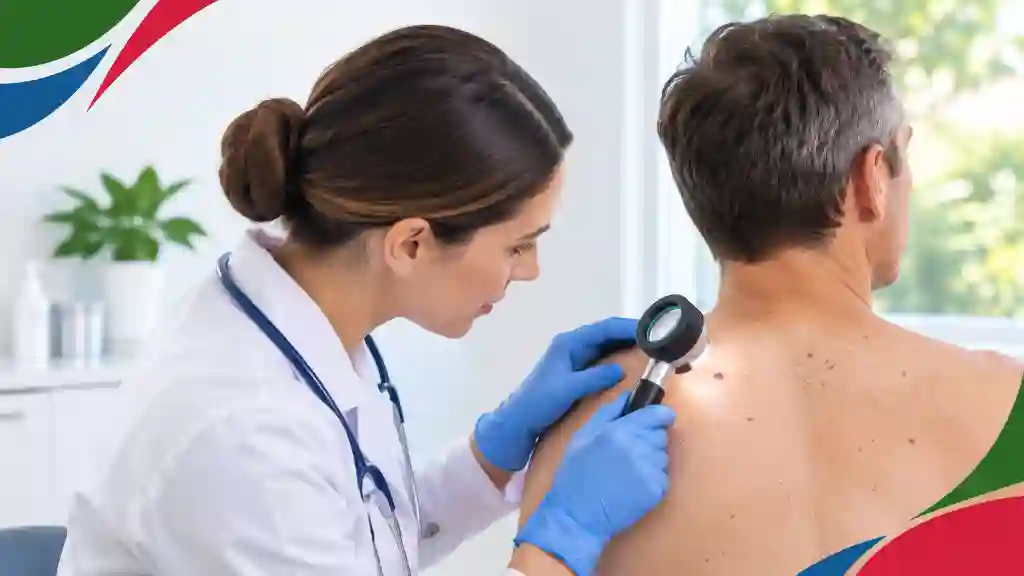
A full body skin check looks at all of your skin, not only the areas you can see in a mirror. Your GP will:
- ask about your sun exposure, past skin problems and family history
- examine your skin from your scalp to your feet, including areas like the back, between the toes and behind the ears
- use a dermatoscope, a small magnifying device, to look closely at any spot of concern
- explain what they found and when you should come back
The check is painless and usually quick. If a spot needs more tests or treatment, your GP will go through the options with you.
How to check your skin between visits
Self-checks do not replace a doctor, but they help you spot changes early. Try this once a month:
- Stand in good light in front of a full-length mirror.
- Look at your face, ears, neck and scalp. Part your hair or use a comb.
- Check your arms, hands and between your fingers, then your chest and stomach.
- Use a hand mirror, or ask someone you trust, to check your back and the back of your legs.
- Look at your legs, feet, soles and between your toes.
- Note anything new, or anything that has changed in size, shape or colour. Taking a photo can help you compare next month.
A useful tip is to look for the odd one out. If one mole looks very different from the others on your body, get it checked.
When not to wait for your next check
Book an appointment soon if you notice:
- a new spot, or a mole that is changing
- a sore that does not heal after a few weeks
- a spot that itches, bleeds or crusts
- a scaly, red or shiny patch that does not go away
You do not need to wait for your yearly check. Early advice gives you the best chance of simple treatment.
Questions people ask about skin check frequency
Is a yearly skin check enough?
For many people, yes. If you are at higher risk, your GP may suggest checks more often than once a year.
Do I need a skin check if I have no moles?
Yes, it can still be worth it. Skin cancer can show up on skin with no moles, such as a scaly patch or a sore that does not heal.
Do I need a skin check if I wear sunscreen?
Sunscreen lowers your risk but does not remove it. Past sun damage stays in your skin, so regular checks still matter.
At what age should I start getting skin checks?
There is no set age. Many people start in their 20s or 30s if they have risk factors. Anyone with a worrying spot should be seen at any age.
Do I need a referral?
No. You can book straight in with a GP.
Book your skin check
Not sure how often you should be checked? Ask one of our GPs. They will look at your skin, talk through your history and give you a plan that fits.
Related pages
This article is general information, not medical advice. Please see your GP about your own health.
Book an appointment with our friendly team.